About the Island / Locals Know Blog / Outdoor & Adventure
Whale Watching on Cape Breton Island: What to Look For (and Where to Find Them)
There's something that stops you in your tracks when you first see a whale. Maybe it's the sheer scale of a humpback's fluke rising from the Gulf of St. Lawrence, dripping and impossibly large. Whatever it is, whale watching on Cape Breton Island has a way of becoming one of those travel memories you carry for life.

There's something that stops you in your tracks when you first see a whale. Maybe it's the sheer scale of a humpback's fluke rising from the Gulf of St. Lawrence, dripping and impossibly large. Maybe it's the quiet that falls over a boat full of strangers right before a spout breaks the surface. Whatever it is, whale watching on Cape Breton Island has a way of becoming one of those travel memories you carry for life.
The good news? You don't have to be a seasoned wildlife enthusiast to have an incredible experience here. Whether you're scanning the horizon from a clifftop trail or leaning over the bow of a zodiac in Pleasant Bay, the Island delivers.

When to Go
The whale watching season on Cape Breton Island runs from late May through October, with July and August being peak months for sightings. By mid-June, humpbacks are arriving in earnest, and by midsummer the Gulf of St. Lawrence is alive with activity.
What You Might See
Cape Breton's waters attract a remarkable variety of species. Here's a quick guide to who you might encounter:
Common whales:
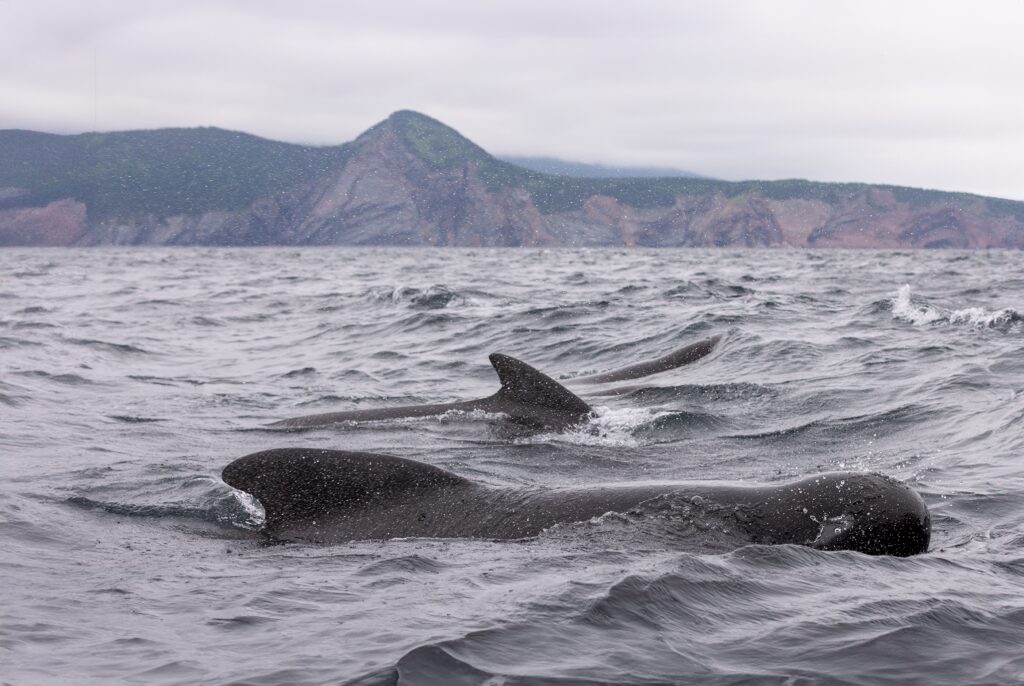
Pilot Whales — Perhaps the Island's most iconic cetacean, pilot whales are highly social and travel in tight family pods that can number in the dozens. Pleasant Bay in particular has a year-round population of pilot whales, and local operators have followed the same family groups for decades. If you're lucky enough to catch a pod surfacing in unison, it's unforgettable.
Fin Whales — The second-largest animal on the planet, fin whales are a genuinely humbling sight. They're fast and sleek, built for open water.
Minke Whales — Usually the first to arrive in spring, minkes are smaller and quicker, but no less exciting to spot.
Atlantic White-Sided Dolphins — Fast, playful and often travelling in large groups, these dolphins frequently join boat tours for a bit of bow-riding fun.
Uncommon:
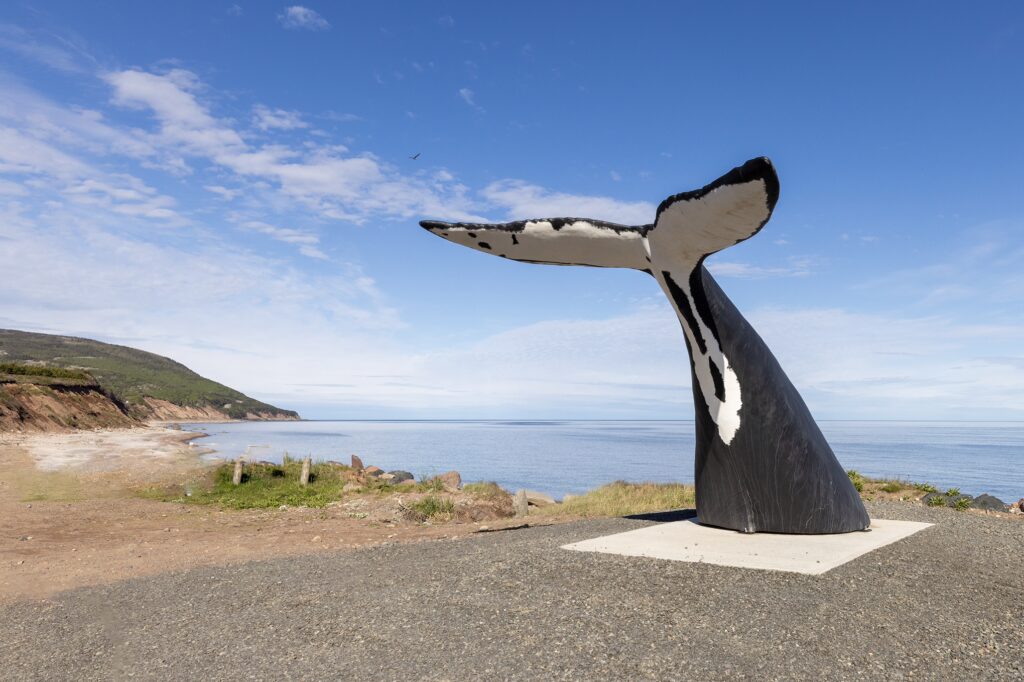
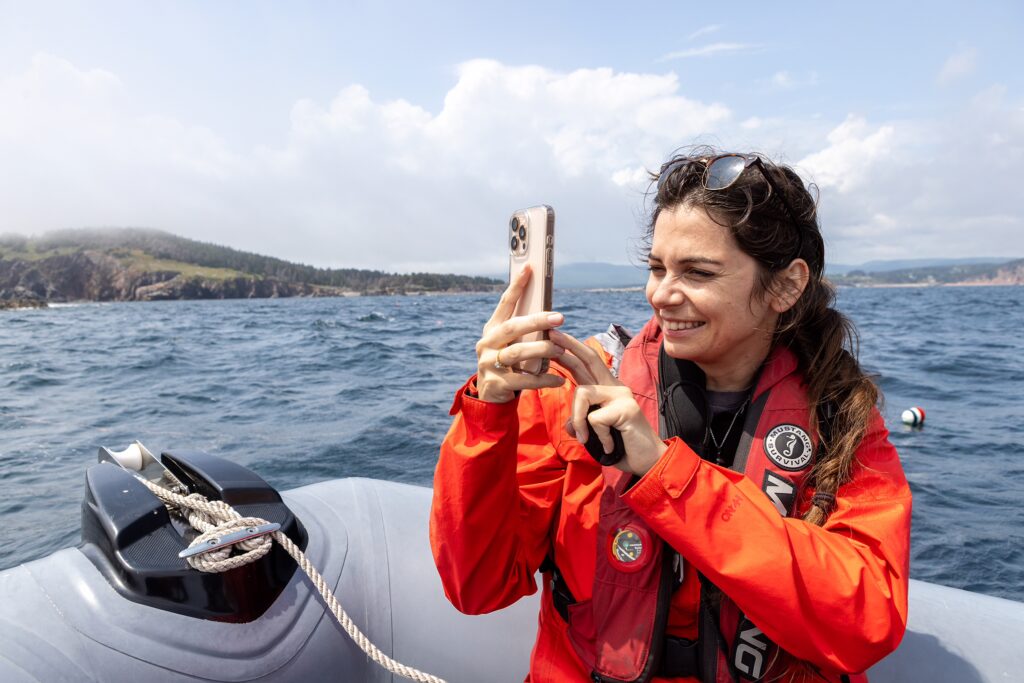
Humpback Whales — These are the showboats of the whale world, known for breaching, tail-slapping and spy-hopping. Their distinctive fluked tails make for iconic photos — keep your camera ready when one dives.
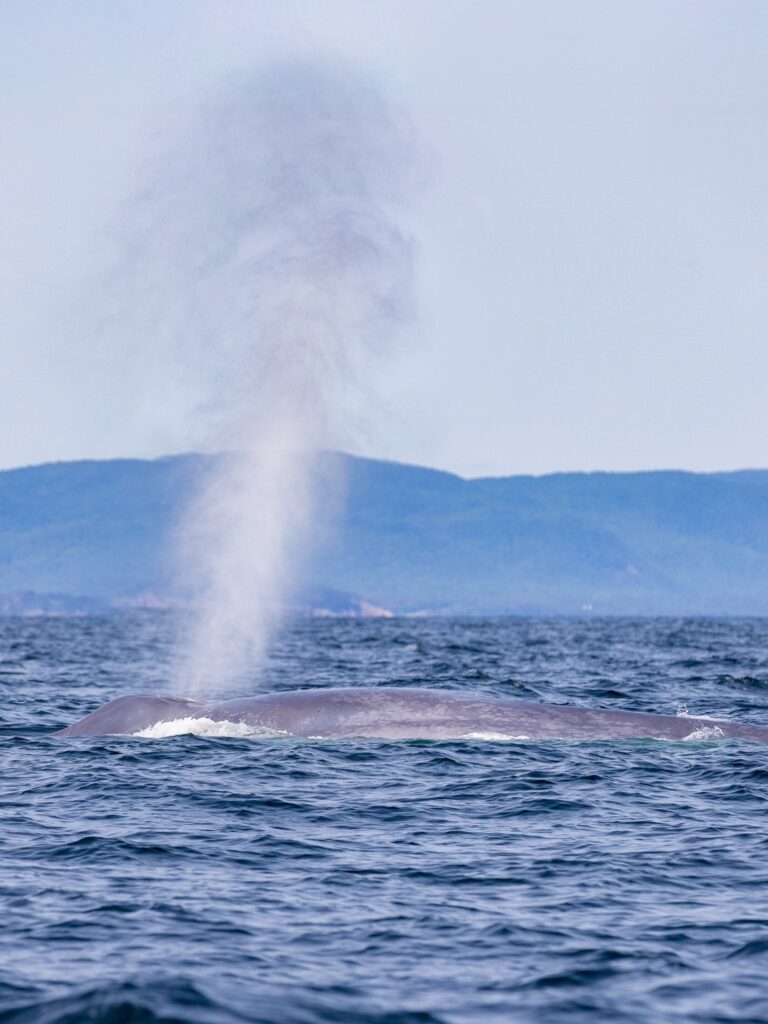
Rare but possible! Blue Whales — The largest animal to ever exist, seeing a blue whale is a rare and awe-inspiring experience. These massive, gentle giants are occasionally spotted cruising the deep waters off our coast during the spring and early summer.
Orca — Known as the apex predators of the ocean, orcas (killer whales) are rare but truly unforgettable sightings. These intelligent and powerful hunters are occasionally spotted patrolling the waters off our coast, often leaving onlookers breathless when they appear.
Where to Go
This stretch of coastline along the Cabot Trail is ground zero for whale watching on Cape Breton Island. The deep, cold waters of the Gulf of St. Lawrence funnel nutrients close to shore here, which in turn draws the whales. Several experienced operators run zodiac and larger vessel tours out of Pleasant Bay and Bay St. Lawrence, and some offer a full guarantee — if you don't see whales, you don't pay.
Pleasant Bay
Bay St. Lawrence
Before or after your tour, stop in at the Whale Interpretive Centre in Pleasant Bay. It's a small but genuinely impressive space, with a full-size pilot whale skeleton suspended from the ceiling and staff who know these animals by name.
Both communities have local whale watching operators worth checking out. Chéticamp sits on the western Cabot Trail and is a great base for a full Cabot Trail loop. Ingonish, on the eastern side, is home to Keltic Express Zodiac Adventures, offering fast-paced zodiac tours along a dramatic coastline.
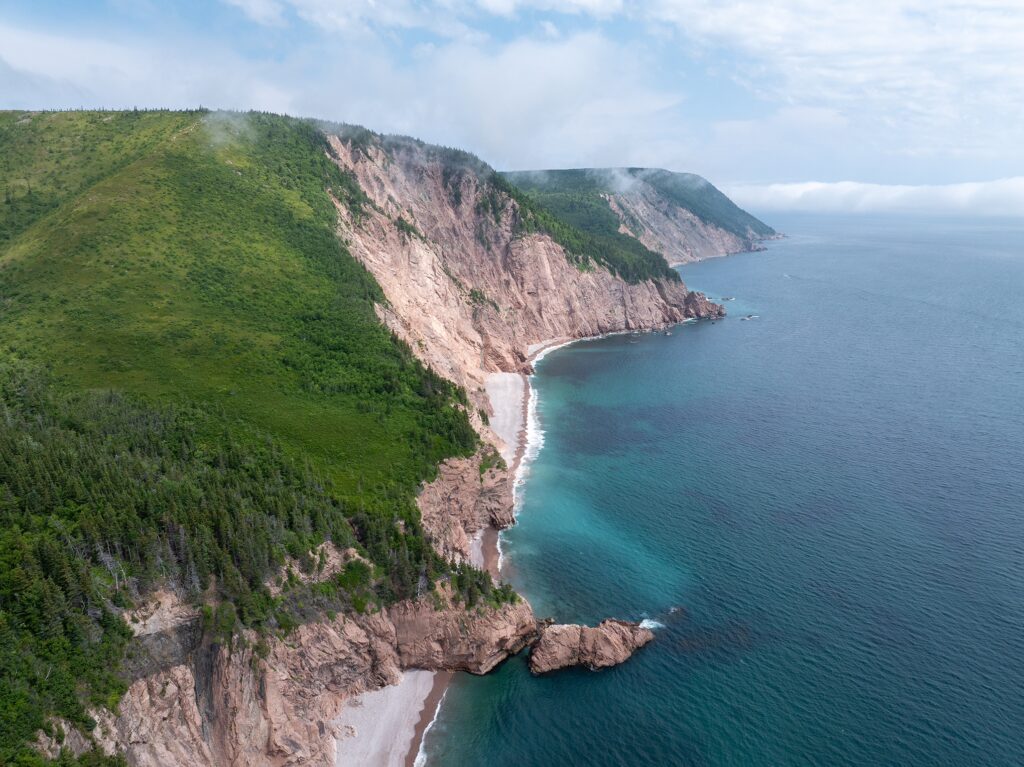
Land-Based Viewing: Skyline Trail & Beyond
Not everyone needs to get on a boat — and honestly, watching a whale spout from a windswept clifftop has its own magic.
The Skyline Trail in Cape Breton Highlands National Park is one of the Island's most famous hikes, and for good reason. The viewing decks at the headland cliff overlook the Gulf of St. Lawrence, and it's not uncommon to spot whales from the platform during summer. Other good land-based vantage points include the MacKenzie Mountain Look-off and Lakies Head Lookoff.
Please note if you are planning to visit the Skyline Trail, a new parking reservation system has been implemented effective from June 26 through October 25, 2026.
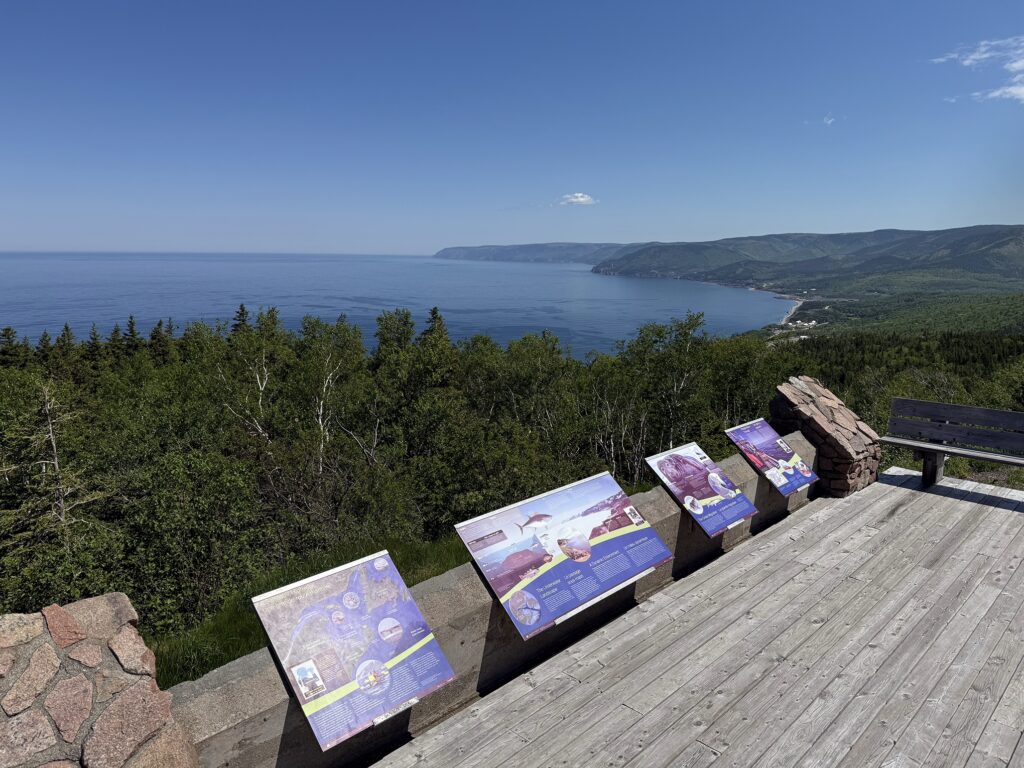
Boat Tour or Land-Based? Here's How to Decide
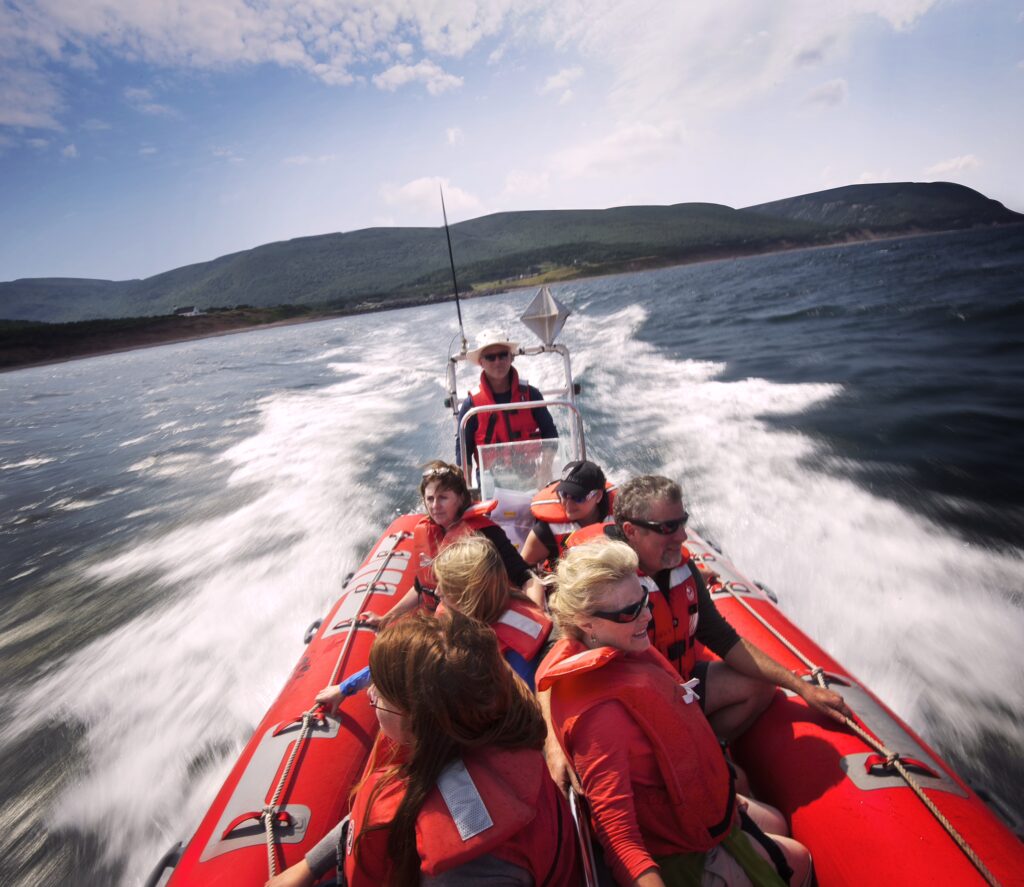
If you want the full experience and close proximity, expert commentary and the thrill of being out on the water, a guided boat tour is the way to go. Zodiac tours are smaller and faster, putting you low to the water with the spray in your face. Larger vessel tours are more comfortable and better for families with younger kids or anyone prone to seasickness.
If you're short on time or prefer to keep your feet on solid ground, the Skyline Trail is a beautiful hike regardless, with whale sightings as a genuine bonus.
Our recommendation: do both.
Tips Before You Go
- Book early. Tours in July and August fill up fast — sometimes weeks in advance. Don't leave it until the day of.
- Dress in layers. Even on a warm day, the ocean feels different. Bring a jacket, you'll thank yourself.
- Wear sunscreen. You'll be out in the open with the sun reflecting off the water. Protect yourself accordingly.
- Bring binoculars. For land-based viewing especially, a good pair makes a huge difference.
- Keep your expectations open. Wildlife is wild. Sightings are never guaranteed (unless an operator says so!), but Cape Breton Island's waters are among the most reliable in eastern Canada for cetacean activity.
Ready to plan your whale watching adventure? Explore tour operators and experiences on cbisland.com.

About the Author
Team Destination Cape Breton
Our team at Destination Cape Breton is always exploring our beautiful Island. We love discovering our hidden gems, working with partners, and putting our Island on the pedestal it deserves!
Related posts...

Winter Gems – Membertou is Right up our Alley!
If you're looking for a day of adventure and quality time spent with loved ones, Sydney will not let you down.

10 Amazing Hikes on Cape Breton Island
When you come to Cape Breton hiking is something that everyone has to do! There are hikes for every age and every ability.

7 Must See Museums in Cape Breton
Looking for an educational experience while visiting Cape Breton? Hoping to immerse yourself in Cape Breton's rich history while travelling the island? Well, you're in luck here are seven 'Must-See' Museums in Cape Breton!
Related Resources


Unlock the Island’s Best-Kept Secrets
Get seasonal itineraries, local tips and member-only offers, straight from Cape Breton insiders to your inbox once a month.
No spam, just wanderlust fuel. Free departure anytime.